
I was about 7 months pregnant with Colin when I had a conversation with another woman who had just recently become a mom herself. We were chatting about people’s sometimes surprising reactions to my pregnancy — “Oh look at you! You’re huge!” often followed with an uninvited belly pat — and she gave me a piece of advice that has stuck with me to this day. “People don’t mean to be inappropriate,” she said. “There’s just something about the sight of a pregnant woman that evokes this kind of emotional response. I’ve come to realize that really, they’re just happy for you, and are trying, in their lame kind of way, to share that happiness with you. It’s coming from a good place. I learned to just accept these gestures in the spirit with which they are intended.”
It made sense to me then, and it still makes sense to me today. It is a more generous, more forgiving approach to interpreting the things people say and do.
I was thinking about this earlier this month as I was scribbling little notes on the back of our holiday cards. I’ve only recently started to hear rumblings about how the greeting “Happy Holidays!” during the Christmas season causes some Christians to bristle a bit. Last year I heard someone complaining about how tactless it is for non-Christians to take part in the winter-time holiday celebrations. Christmas, the argument goes, is to celebrate the birth of Jesus. It’s a birthday party of sorts. And if you don’t believe that Jesus Christ was the literal son of God, what makes you think you have the right to participate? It’s like you’re crashing someone else’s birthday party.
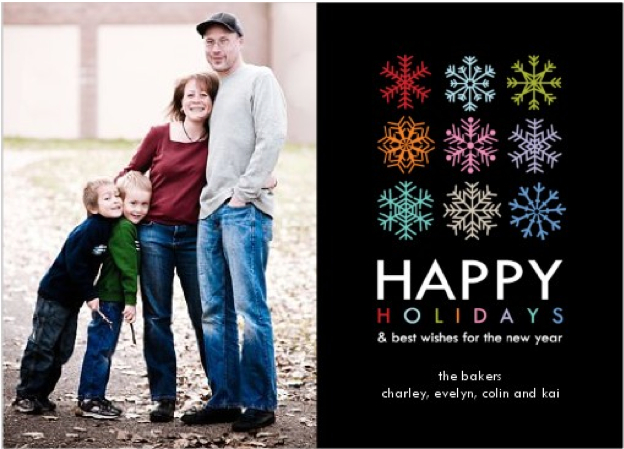
Without getting into the theological debates about the origins of our winter holiday season (Merry Chrima-Hannu-Kwaanza-Bodhi-Stice to you, by the way), I would think that we can all agree that a simple card, with the inscription “Happy Holidays and best wishes for the New Year” is not likely intended to be an overtly aggressive gesture. It’s just an attempt to send a friendly “Howdy. Hope you’re well!” to the ones we love.
If the world were free from truly intentional offenses, then I guess I could maybe see the sense in looking for issues to dissect in search of possible hidden meanings. Oh yeah? What do you really mean by that? But there appears to be no limit to legitimate instances of intentional insensitivity. So why not give people the benefit of the doubt? Why not accept a smiling, “Congratulations! You’re having a baby! Looks to be a 10 pounder at the rate you’re going!” or an innocent “Happy Holidays” as relatively innocent attempts at connecting in a positive way?
Now when an older man calls me Sweetie, or someone tells me I look like I’m not feeling well, I take into consideration what I think that person’s motivation might be. Sure, the older man could be trying to patronize me, could be trying to reaffirm his authority over me … or he could just be attempting to use a term of endearment in addressing me, trying to show some sign of affection. And yeah, the person could be trying to tell me that I look particularly ugly this morning… or she could just be trying to show concern for me, wanting to make sure I’m okay.
It takes some practice, and just a little bit more effort, to try to decipher what someone’s true intentions might be. But I think it’s worth it. I know that I’m that much happier when I take the time to consider the spirit with which these things are intended.
 eleven bee